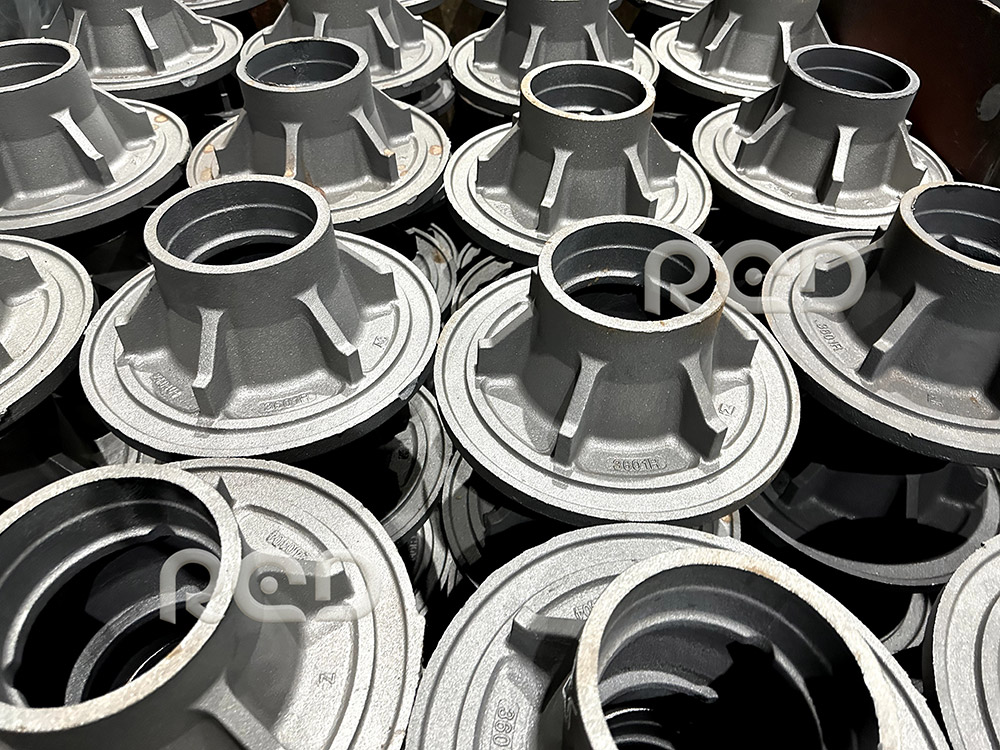
The wheel hub is one of the most critical safety components in a heavy truck. It connects the axle to the wheels, supports the vehicle’s weight, transmits driving and braking torque, and ensures smooth wheel rotation. Because heavy-duty trucks operate under high loads, long distances, and demanding road conditions, wheel hubs must provide exceptional strength, durability, and dimensional accuracy.
1. Heavy Truck Wheel Hub Structure
A heavy truck wheel hub is the central rotating component mounted on the axle spindle. It accommodates wheel bearings, brake drums or brake discs, and wheel rims while transmitting loads from the road to the axle.
A typical heavy truck wheel hub consists of:
Hub body
The hub body is the main structural component of the wheel hub assembly and serves as the foundation for all other parts. It is typically manufactured from high-strength ductile iron QT450-10
Bearing seats
The bearing seat is the precision-machined bore inside the hub where tapered roller bearings are installed. Its machining accuracy directly affects bearing fitment, wheel rotation, and overall vehicle performance.
Wheel bolt holes
The wheel bolt holes are precision-machined holes used to install the wheel bolts that secure the wheel rim to the hub.
Brake drum mounting flange
On heavy trucks equipped with drum brake systems, the brake drum mounting flange provides the mounting surface for the brake drum, which is securely fastened to the hub using high-strength wheel studs and nuts.
Oil seal seat
The oil seal seat is designed to accommodate the wheel hub oil seal, which prevents lubricant leakage while protecting the bearing system from water, dust, mud, and other contaminants.
Wheel Mounting Flange
The wheel mounting flange is the surface where the wheel rim is attached to the hub. It provides accurate positioning and secure fastening of the wheel through wheel studs and lug nuts.
2. Functions of a Heavy Truck Wheel Hub
The wheel hub performs several essential functions:
Vehicle Load Support
The hub supports the entire vehicle weight and transfers dynamic loads from the wheel to the axle.
Wheel Positioning
It ensures accurate wheel alignment and maintains proper concentricity during high-speed rotation.
Torque Transmission
Driving torque from the axle and braking torque from the brake drum are transmitted through the hub.
Bearing Installation
The hub houses tapered roller bearings that reduce friction while carrying both radial and axial loads.
Brake System Integration
For drum brake axles, the brake drum is mounted directly onto the hub.
3.Why Manufacturing Quality Matters
A high-quality wheel hub provides:
Longer bearing life
Better vehicle stability
Reduced maintenance costs
Improved safety
Higher fatigue resistance
Lower operating costs
Poor-quality hubs may lead to premature bearing failure, excessive runout, wheel vibration, oil leakage, or even wheel separation.
The heavy truck wheel hub is a key component that directly affects vehicle safety, durability, and operational efficiency.
Whether used on tractors, trailers, mining trucks, or construction vehicles, choosing wheel hubs with strict quality control ensures longer service life, better performance, and lower maintenance costs.